

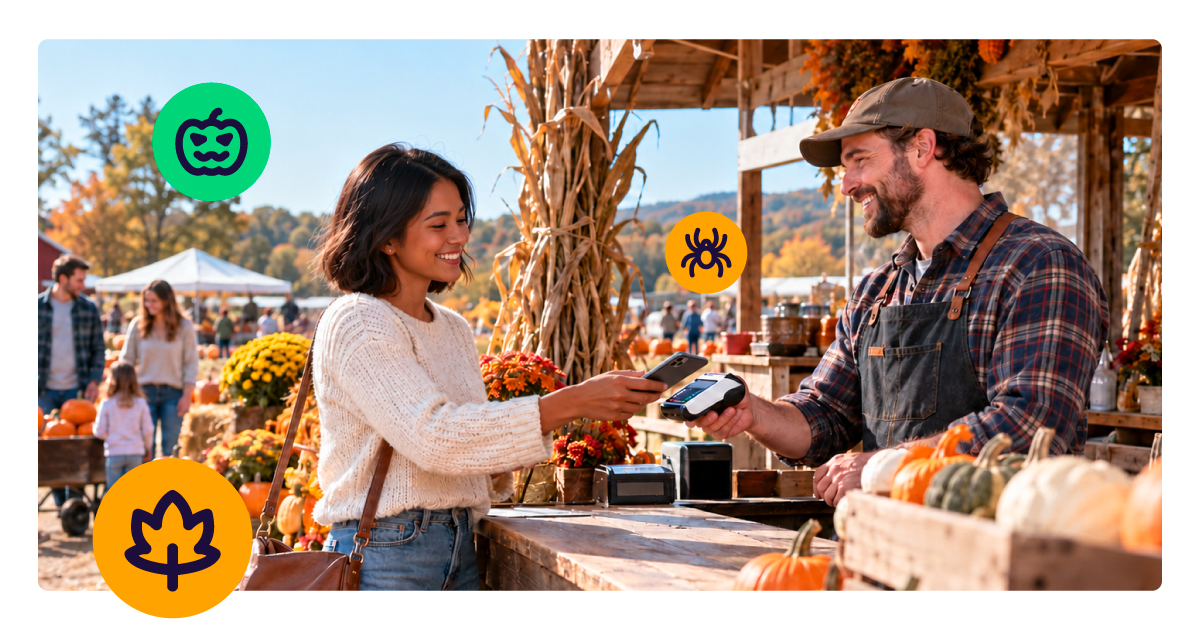
Each fall, seasonal merchants open their doors for business. Costume shops fill empty storefronts. Haunted attractions light up old warehouses. Pumpkin patches and corn mazes open their gates for a few short weeks, only to close until next year.
These merchants are easy to overlook and difficult to serve. Since they earn most of their annual revenue in a handful of weekends, they need payments that work from opening day. The payment providers that make them easy to onboard, equip and bring back can turn a few busy weeks into a lasting, profitable relationship, winning a segment of merchants that most competitors miss.
Halloween Is Big Business for Seasonal Merchants
Halloween no longer happens in a single night. Nearly half of consumers (49%) plan to start their Halloween shopping in September or earlier, up from 34% in 2016, according to the National Retail Federation (NRF). The NRF expects Halloween spending to reach $13.5 billion this year.
Seasonal businesses are among those looking to capture a share of that spending. Specialty Halloween and costume stores are the second most popular place to shop, drawing 32% of consumers. Local and small businesses are gaining ground too, with 13% of shoppers planning to buy from them, nearly double the 7% from a decade ago.
And retail is only part of the picture. Corn mazes, hayrides and on-farm fall festivals belong to a category the U.S. Department of Agriculture calls agritourism. Farms and ranches in the United States earned $1.26 billion from agritourism in 2022, the most recent year the USDA has counted, up 12.4% from five years earlier after adjusting for inflation.
The Business Opportunity Behind Seasonal Payments
For independent sales organizations (ISOs), payment providers and software platforms, these short selling windows can represent a valuable business opportunity. Seasonal merchants may process significant transaction volumes in just a few weeks. And while their season is short, the relationship doesn’t have to be.
Win a merchant once, deliver a reliable payment experience, and there’s an opportunity to earn processing revenue every time they return. Rather than continually finding new merchants, providers can build a portfolio of seasonal businesses that generate repeat revenue year after year.
There’s also room to grow. A business running a Halloween attraction might operate a Christmas market, summer festival or other seasonal event. Providers that can support these different ventures with flexible payment solutions have more opportunities to grow the relationship and become a trusted long-term partner.
Why Seasonal Merchants Are Hard to Serve
When a year of revenue is packed into a few weekends, seasonal merchants face challenges that payment providers don’t typically see with year-round retailers:
- No margin for downtime: A payments outage on a peak Saturday means lost revenue the merchant never gets back
- Volume that looks like risk: A jump from zero to peak volume in a few weeks, followed by months of silence, is a pattern that often triggers holds, reserves or declines
- Temporary locations and staff: Fields, tents and parking lots often have weak internet connectivity, and more often than not, the person running checkout is a seasonal hire who started two weeks ago
- Lines at every turn: Entry gates, concession stands and merchandise tables all need fast checkouts
Slow checkout costs sales. Long lines can mean missed purchases and frustrated customers. In a recent NMI survey of 1,000 U.S. consumers, 48.2% said they often abandon their carts when the payment experience becomes too frustrating or complicated. For a merchant with only a few weekends to make the year work, every customer who walks away counts.
What a Pop-Up-Ready Payments Setup Looks Like
Each of these challenges has a practical answer.
Onboarding Before the Rush
Seasonal merchants must be ready to take payments on opening day, which means onboarding them in late summer, not mid-October. Use the merchant application to document expected seasonal volume and timing up front. Ask returning operators for last season’s sales history, since real numbers make a stronger case to underwriting than an estimate. When your underwriting team knows a spike is coming, it’s less likely to raise unexpected concerns when volumes increase, and a busy October won’t look like fraud. Onboarding early also leaves time to ship and test devices before the first weekend.
For returning merchants, make the process as straightforward as possible. Plan ahead for any required account reviews or compliance checks, so they’re not starting from scratch every season.
Mobile and Tap to Pay Acceptance
Few seasonal merchants sell from a single counter. Phones and handheld devices turn any table or gate into a checkout, so staff work the line instead of waiting for customers to come to them.
With tap to pay, a compatible smartphone becomes a secure, contactless payment terminal, accepting cards and digital wallets without additional hardware. For seasonal merchants, that means they don’t need a dedicated terminal for every station. It’s also a quick and easy way to add extra checkout capacity during busy periods, helping staff serve more customers and keep lines moving.
Customers already expect to tap: nearly 70% of face-to-face Visa transactions in the U.S. are now tap to pay, according to Visa Chief Executive Officer Ryan McInerney. The same device that sells tickets at the entrance also handles concessions, merchandise and upgrades, so merchants can earn more from every visitor.
Ease of use matters as much as hardware. Choose payment solutions with a simple, guided checkout flow, so a seasonal hire can take payments confidently after a short walkthrough on day one.
Offline-Capable Payments
A pumpkin patch at the edge of town won’t always have a strong signal. Devices with offline, or store-and-forward, capabilities keep sales moving when the connection drops and send transactions through once it returns.
But offline payments aren’t just a backup. At busy attractions, where networks can be slow or overloaded, offline-first processing can help keep checkout times consistent and lines moving. Payments are securely captured and stored on the device, then automatically submitted for authorization when connectivity returns.
Because those payments are authorized later, merchants must set sensible limits on offline transactions to manage the risk of declines.
Online Pre-Sales
Not every sale has to happen on site. Hosted payment pages, payment links and quick response (QR) codes let haunted attractions and festivals sell timed tickets in the weeks before an event. Pre-sales bring in cash before opening night and shorten the line at the gate. They also show the merchant how busy each night will be, so they staff up for sold-out Saturdays instead of guessing. For seasonal merchants, making it easy to book and pay in advance helps secure sales before the gates even open.
Keep the Relationship Alive After October 31
When a typical merchant goes quiet for months, it signals churn. For a seasonal merchant, it’s just the off-season. Treat dormancy as normal and keep accounts in good standing between seasons, so merchants don’t have to start over next year.
Close out each season with a short review. Walk the merchant through their transaction activity, their peak hours and any checkout bottlenecks. That conversation gives them a better plan for next year and gives you a natural reason to stay in touch.
For payment providers, these conversations are also an opportunity to identify additional services, expand payment acceptance and strengthen a relationship that can continue to generate revenue for years.
Most importantly, reach out early. The merchant whose checkout ran smoothly in October will call you back in August. The one whose terminal failed on the busiest night of the year won’t.
Turn Seasonal Merchants Into Long-Term Customers
Seasonal merchants reward the providers that plan ahead. Give them fast onboarding, flexible devices and payments that keep working on their busiest nights, and they’ll have every reason to come back season after season.
That planning starts with devices that work wherever your merchants set up shop. At NMI, we designed AXIUM SmartPOS to support many selling environments from one platform:
- Countertop and handheld devices that accept tap to pay
- An offline-first workflow that keeps payments moving when the signal drops
- Remote device management, so you configure and update devices without a site visit
For ISOs and software platforms, that flexibility makes it easier to support merchants across different locations, events and seasons without having to build a new payments setup every time.
Whether your merchants are running Halloween attractions, Christmas markets or summer festivals, we help you deliver the payment experiences they need while keeping control of your merchant relationships.
Learn more about AXIUM SmartPOS or talk to our team about getting your seasonal merchants ready for their next rush.