

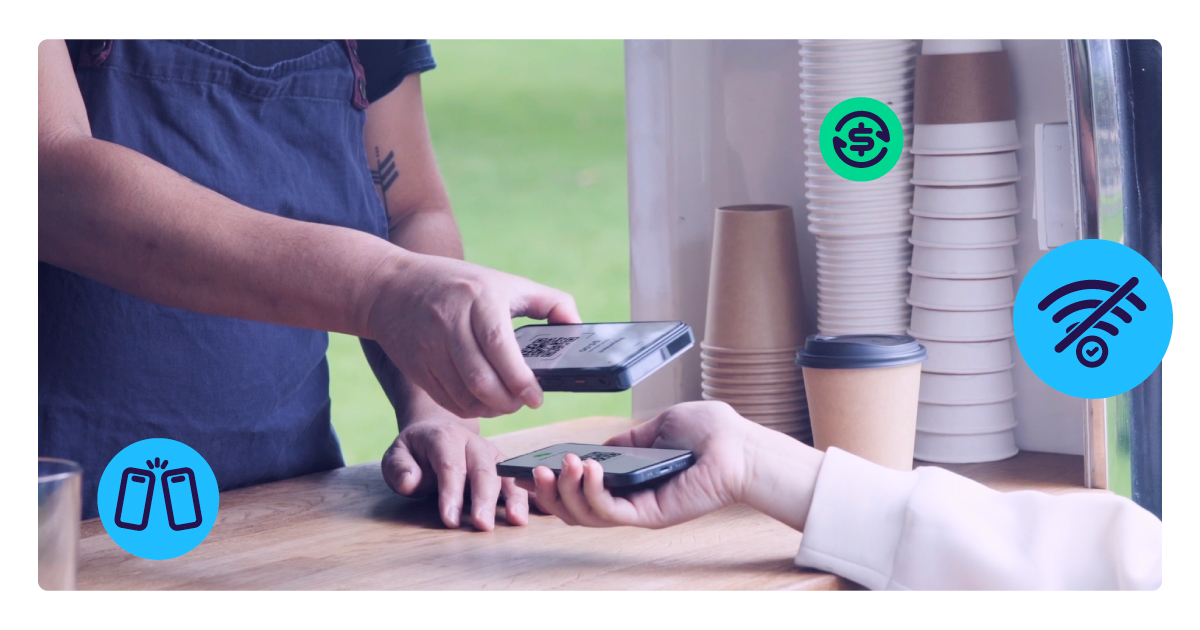
Offline processing is a capability your merchants need, and it does far more than keep payments moving when connectivity drops. Almost every payment provider frames offline payments the same way: as a backup for when the network goes out or when there’s no connection in the field at all.
But offline payments don’t have to be just a backup. For many merchants, depending on how and what they sell, processing payments offline as part of their everyday operation creates a more consistent checkout experience. Rather than relying on a network connection for every transaction, they can keep customers moving and send transactions for authorization once connectivity is available.
That gives you an opportunity to think differently about offline payments: not only as a fallback for when something goes wrong, but as an intentional choice for the right merchant.
What Is Store-and-Forward Credit Card Processing?
What we colloquially call offline payments is actually store-and-forward (SAF) card processing. SAF isn’t the only type of offline payment, but it is the most common. With SAF, the payment and the card data are encrypted and stored directly on the card terminal. The customer pays. The terminal captures the data and prints a receipt. To the customer, everything looks completely normal. Later, once the connection is reestablished, the stored payments are sent to the card network for authorization in a batch.
This flow lets a terminal accept a card payment even when it isn’t connected and can’t get immediate authorization. It also gives merchants consistently fast checkout whenever long, fast-moving lines or unreliable networks could otherwise cause delays.
Offline-First Payments as an Intentional Choice
Deferring authorization is not a new concept. Before modern digital payments over fast internet connections, card networks set floor limits for merchants to keep checkouts moving. Any transaction under the limit didn’t require immediate authorization. Floor limits are mostly obsolete now, but the principle behind them still matters: sometimes it makes sense to defer authorization to keep payments moving and improve the customer experience.
For today’s merchants, the issue is less about authorization speed and more about consistency. Connectivity problems are not always as dramatic as “the internet is completely down” or “there’s no connection out in the field.” A merchant might have congested Wi-Fi shared with other systems, a payment terminal sitting at the edge of network coverage or thousands of connected devices competing for bandwidth at a busy venue. In these cases the majority of transactions go through at normal speed, but some hang or fail outright at random. That’s a stability issue, and for most merchants the immediate fix is to wait it out or reset the terminal. Even occasional delays become a problem when a merchant is processing large numbers of transactions. Going offline-first takes the network connection out of the immediate checkout experience. The payment can be captured quickly, while authorization happens later when connectivity is available. For the right merchant, that means more predictable transaction times and fewer interruptions at the point of sale.
Is It Safe to Accept Payments Offline?
Modern payments hardware with strong built-in encryption can securely store offline transactions until they are ready to be submitted. But there is an important trade-off. Because the payment isn’t sent for authorization in real time, if it ultimately fails, your merchant won’t know until well after the customer has walked out the door. That means offline payments carry a higher risk of losses from failed transactions, which makes them a better fit for some merchants than others. So before you recommend it, weigh transaction value, volume, margins and connectivity.
Which Merchants Could Benefit From Offline-First Payments?
Merchants best suited to offline-first payments often have several things in common:
- High transaction volume: Consistency matters most when delays stack up fast, and a single hanging transaction quickly turns into longer lines and a worse customer experience
- Low ticket values: Average transactions are low enough that the financial impact of an occasional failed transaction is relatively small
- Strong margins: Healthy margins mean one lost transaction doesn’t eat the profit from several others. Paired with low ticket values, this keeps risk contained
- Inconsistent connectivity: Merchants with poor connectivity or little control over their networks reduce their dependence on network performance at the point of sale and gain consistency they can’t get any other way
Imagine a mobile concession stand at a football game. The line is long and needs to move fast, so a transaction that stalls while it waits for authorization holds up everyone behind it. The financial risk runs the other way: ticket values are low and margins are high, so the occasional failed transaction barely registers against a night’s revenue. Add concrete stadium construction, thousands of phones in one place and a cart parked between repeaters, and you get poor network penetration, interference and weak signal. This is an ideal case for offline payments as a practical, everyday operating choice rather than a backup the merchant turns to when the network fails.
What Your Offline-First Merchants Need From Their Payments Hardware
To give your merchants a reliable, frictionless offline payments experience, equip them with hardware built for offline-first operation.
Many payment terminals can process offline, but there are often limits to what that covers. Offline card processing is the minimum. But if your merchants are going to rely on offline payments regularly, you need to think about the entire checkout experience. What happens if your merchants depend on loyalty programs or gift cards? Do those still work? If the connection is unstable, can the mobile terminal still talk to a standalone receipt printer or other accessories? For merchants using offline payments as an occasional backup, these questions aren’t critical. For merchants going offline-first every day, they are.
Look for four characteristics:
Mobile flexibility: Your offline-first merchants will likely need portable payment systems, which makes handhelds ideal. Android-based SmartPOS systems combine payment acceptance with the flexibility of a handheld device, and they are quickly replacing older, more traditional terminals. Start there.
Offline-first architecture: Look for hardware designed to support offline SAF payments. That means strong security with built-in point-to-point encryption (P2PE) to protect stored offline transactions, and automatic syncing so your merchants don’t have to take extra steps to submit their deferred authorizations once connectivity returns.
All-in-one capabilities: The more devices and systems a merchant bolts together, the harder offline-first workflows become. Depending on the merchant’s needs, all-in-one hardware brings payment acceptance, gift cards, customer loyalty programs, receipt printing, barcode scanning and other functions into a single device.
Easy remote updating: Businesses are not static. Average ticket size climbs, transaction volume drops, and going back online starts to make sense again. You need to reconfigure that hardware as needs evolve and be able to update settings and manage devices remotely, without having to physically retrieve the terminal.
(H2) Make Offline-First Easy With NMI’s AXIUM SmartPOS
NMI now offers the AXIUM SmartPOS: a modern, Android-based handheld that combines payment acceptance and business functionality in one device built for modern payment environments.
The AXIUM SmartPOS offers:
- An open, Android-based platform for development and deployment flexibility
- Offline-first architecture for merchants that benefit from deferred authorizations
- Built-in P2PE security to protect your merchants’ transactions and help reduce Payment Card Industry (PCI) scope
- All-in-one support for payment cards, loyalty programs, gift cards, onboard receipt printing, onboard barcode scanning and more
- Easy updating and fully remote device management via the Ingenico Estate Manager
For merchants operating in busy locations or where connectivity is unpredictable, offline payments don’t have to be the emergency plan. With the right setup, they become part of a faster, more consistent way to take payments.
To find out more about how the AXIUM SmartPOS turns offline payments from a backup into an advantage for your merchants, reach out to a member of our team today.
