

Just 11% of U.S. consumers have used AI to complete a transaction, as trust, control and transparency remain barriers to agentic commerce
The technology industry is racing towards AI agents that can browse, choose and buy on a consumer’s behalf, but American shoppers are not there yet. They want AI to help them find products, save money and remove friction from checkout, but they still want a human hand on the final purchase. New research from NMI®, a global leader in embedded payments infrastructure, reveals a significant gap between the industry hype surrounding agentic commerce and the authority consumers are currently prepared to give AI.
NMI’s Embedded Payments: Agentic Commerce Reality Check, a survey of 1,000 U.S. adults, found that consumers are increasingly using AI to start their shopping journeys, but few are ready to let it finish the job. While Salesforce reports a 200% rise in consumers using AI as their first step in shopping, NMI found that just 11% have used it to complete a transaction.
Consumers are embracing AI as a shopping assistant, using it to find information, discover products and save money, but most are not ready to let it make the final decision or spend on their behalf:
- Just 10% would give AI full control over a purchase
- 45% would not trust AI to make purchases on their behalf at all
- 70% say they must be able to review or override AI’s decision before a purchase is made
- 69% do not trust AI to process payments securely
Tiffany Johnson, Chief Product Officer at NMI, said:
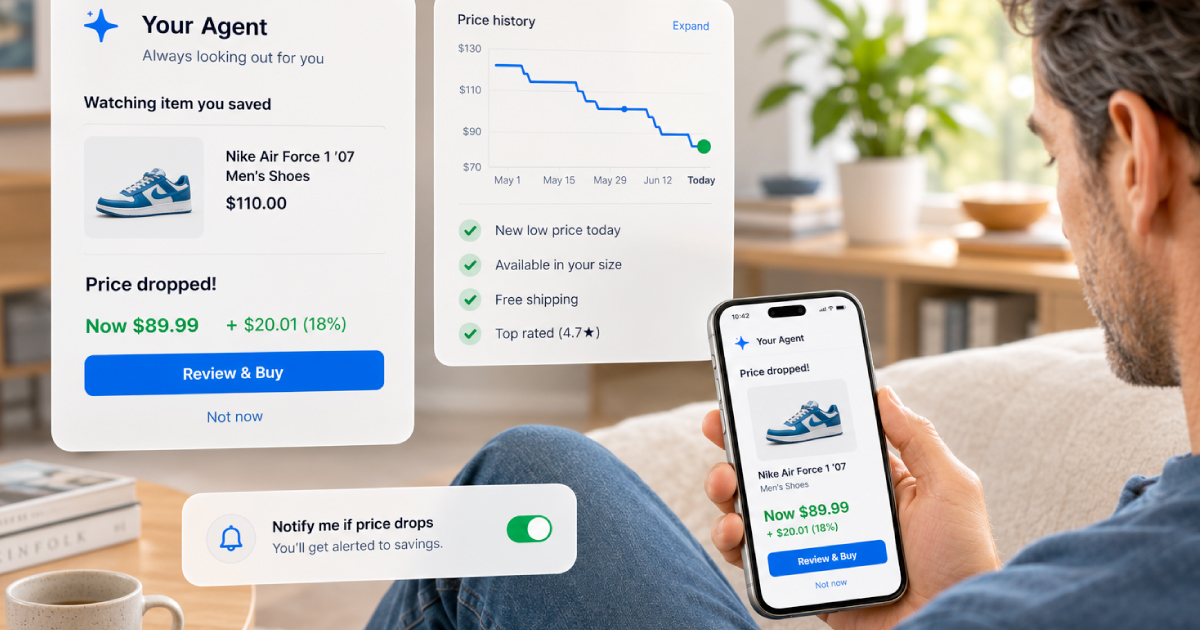
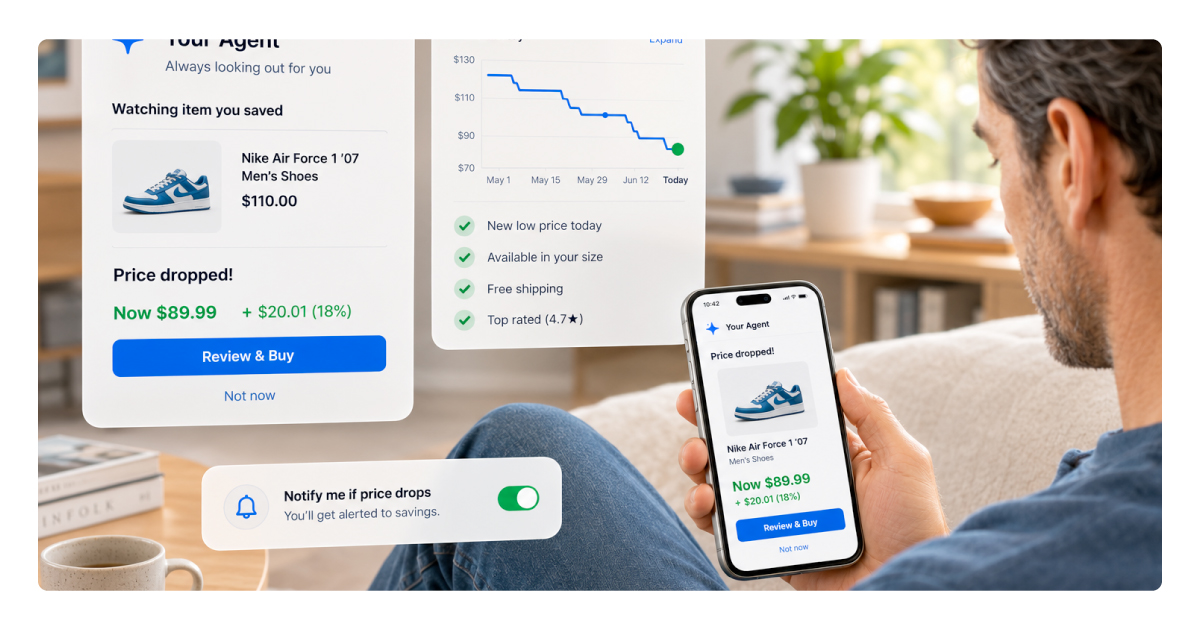
“The industry is designing for autonomy, while consumers are still asking for assistance. There’s a big difference between using AI to quickly surface the right information to help you choose a pair of shoes and AI taking over the entire shopping journey. With back-to-school shopping underway and Labor Day sales around the corner, we expect more consumers to turn to AI to search, compare and find the best deals, but most are still not ready to surrender control of the purchase itself. For agentic commerce to move from an impressive demonstration to an everyday behavior, earning that permission will matter just as much as building the technology. Consumers need to know that AI understands what they want, stays within the limits they set and cannot spend beyond the authority it has been given.This approach to agentic commerce can help build consumer trust while allowing businesses to make the painful parts of shopping easier, without taking away what people value most: the satisfaction of a good purchase and the sense that they had the final say. ”
Consumers want AI to remove friction, not remove their involvement
More than half of U.S. consumers, 53%, used AI for research or information searches in the past month, while 33% used it for shopping or product discovery. Its most common role remains that of a “better search engine,” selected by 39% of respondents.
The research shows that consumers are not rejecting AI in commerce. Instead, they are drawing a clear boundary between tasks that assist them and decisions that commit their money.
- 63% would use AI to insert discount codes automatically during checkout
- 59% are comfortable with AI recommending products
- 58% would allow AI to fill in their shipping address
- 57% believe AI can make shopping faster and more convenient
- 56% would use it to make checkout faster and more seamless
That willingness declines sharply as AI begins to make more personal or consequential decisions. Fifty-eight percent are uncomfortable with AI recommending clothing sizes based on customer reviews, while 55% do not want AI recommending which payment method they should use. Seventy-six percent are uncomfortable with AI completing purchases on their behalf, and only 3% currently describe AI as a personal shopper that manages every stage of the shopping journey.
Parents and younger consumers are moving faster, but still want boundaries
Parents, Millennials and Gen Z are adopting AI-powered shopping more quickly than other groups. Almost half of parents with children at home, 48%, have used AI for shopping or product discovery, compared with 25% of adults without children at home. Parents are also nearly three times as likely to have completed a transaction using AI, at 19% compared with 7%. Yet only 16% of parents would give AI full control over a purchase.
Similarly, 48% of both Millennials and Gen Z say they are excited about agentic commerce and believe it could make their lives easier. But even among these earlier adopters, relatively few are prepared to hand over complete purchasing authority. Only 16% of parents, 14% of Millennials and 13% of Gen Z would give AI full control over a purchase.
The findings suggest that greater familiarity with AI increases enthusiasm for agentic commerce, but does not remove the need for strong safeguards.
Trust, control and transparency will determine adoption
Consumers appear more comfortable with AI operating invisibly within commerce than acting autonomously at the moment of purchase. Sixty-eight percent would not be surprised to learn that AI is already being used behind the scenes to streamline payment experiences. However, when AI is given the ability to spend, consumers’ concerns center on three clear imperatives:
Trust: consumers need confidence that their money and payment information will remain secure:
- 69% do not trust AI to process payments securely
- 61% cite security or fraud as a concern about AI completing purchases
- 84% have never uploaded payment details to an AI tool to enable purchases
The consequences of a failure would extend beyond the company providing the AI. If an AI tool made a purchase before a consumer was ready, 62% would blame the AI provider, but 34% would blame the retailer and nearly one in four, 24%, would hold the payments provider responsible.
Control: consumers want to set clear boundaries around what an AI agent is permitted to do:
- 70% say it is important that they can review or override an AI decision before a purchase
- 60% worry AI could spend more than they intended
- 57% are concerned about losing control over purchases
Transparency: consumers also want to understand what AI has selected and why before their money moves:
- 58% worry an AI shopping agent could purchase the wrong item, size, color or brand
- 50% are concerned about having limited visibility into AI’s decisions
- 55% do not want AI recommending their payment method
Johnson added:
“Payments is where the promise of agentic commerce meets real consumer risk. If an AI agent is going to spend someone’s money, it has to be clear what that person agreed to, what the agent is allowed to do and when it needs to ask for approval again. That means payment infrastructure will need to carry much more context. It will have to connect identity, authentication, permissions and secure credentials so that every transaction reflects what the consumer actually intended, not simply what the AI was technically able to do.”
About the research
NMI’s Embedded Payments: Agentic Commerce Reality Check surveyed 1,000 U.S. adults about their current use of AI, their attitudes towards AI-powered shopping and payments, and the factors that would influence their trust in agentic commerce.